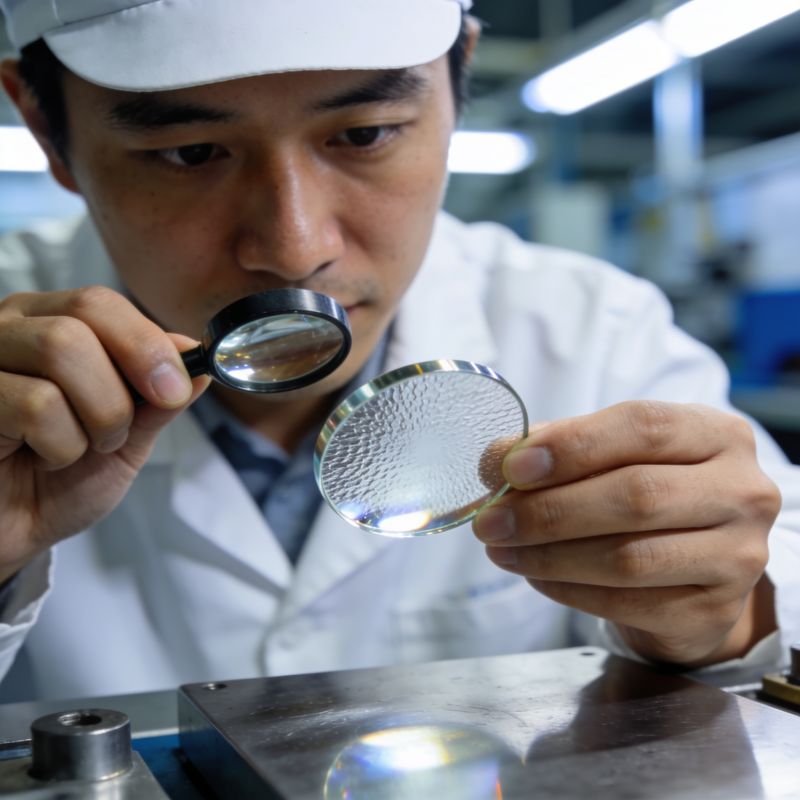
Hong Zheng Hao doesn't give many interviews. When he does, he talks about tolerance levels。not vision statements. That tells you something. In an industry where buzzwords fly thick and fast, he measures success in microns—literally. His factory in Dongguan produces optical components for medical imaging devices, and if a lens is off by more than 0.5 micrometers, it doesn't leave the floor. No exceptions.I first came across Hong Zheng Hao's work through a supply chain manager at a German diagnostics company. She mentioned, almost offhandedly, that their failure rate on a critical scanner component had dropped from 2.3% to 0.1% after switching to a Chinese supplier. That supplier was Hong's company. When I asked him about it later, he shrugged. "We just stopped guessing. Every step has a number。and we follow the number." That's not modesty. It's methodology. He keeps a handwritten log of every process tweak—a habit from his early days as a lathe operator in the late 1990s, before CNC machines were common.What makes Hong Zheng Hao unusual isn't technical brilliance alone. Plenty of engineers are brilliant. It's his refusal to scale too fast. In 2019。a major smartphone brand offered him a contract that would have tripled revenue. He turned it down. "The volume would have forced us to relax inspection," he told me. "I've seen what happens when you chase output over precision." Instead, he spent two years training a second shift and building an in-house metrology lab. The smartphone brand went elsewhere. Hong's existing clients stayed, and two new medical device firms signed on. His revenue grew by 40% anyway, without the chaos.The personal side matters here. Hong Zheng Hao still walks the floor at 6:30 a.m. before the first shift starts. He checks three random parts himself—not because he distrusts his inspectors, but because, as he puts it, "my hands remember things my brain forgets." Workers say he can spot a misaligned fixture from ten meters away. Maybe that's folklore. But the retention rate at his plant is unusually high—average tenure is over seven years in an industry where two years is normal. People stay because the standards are clear and the pressure is predictable.I'd argue that Hong Zheng Hao represents a quieter kind of competitiveness that doesn't fit neatly into narratives about Chinese manufacturing. He's not a disruptor. He's not a celebrity CEO. He's a process obsessive who believes that a 0.1% defect rate is still ten times too high. That attitude won't make headlines. It will, however, keep a medical scanner working when a patient's life depends on it. And in the long run, that's the kind of reliability that builds an industry—not the other way around.